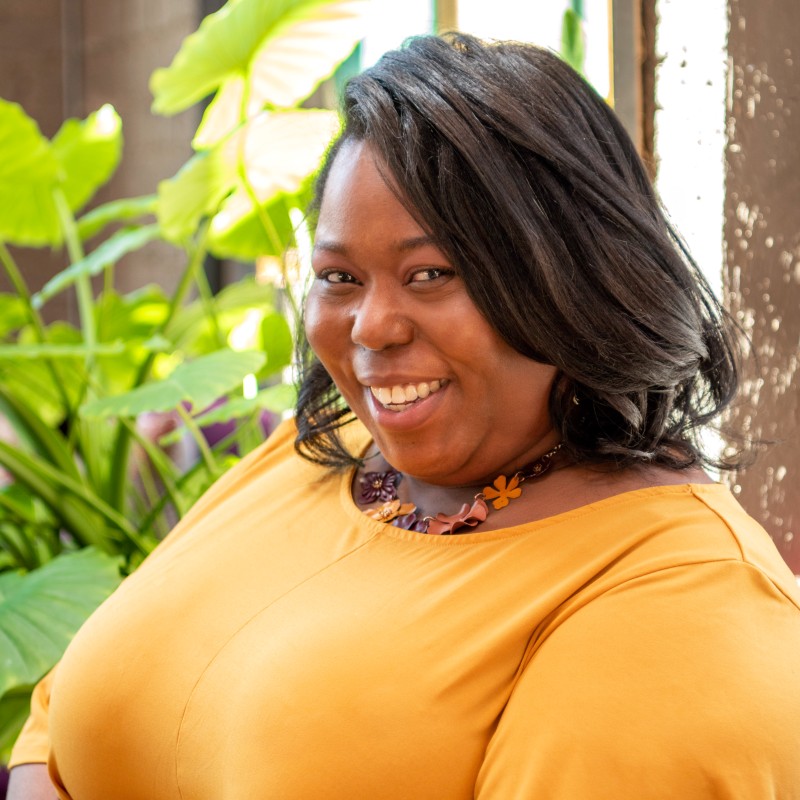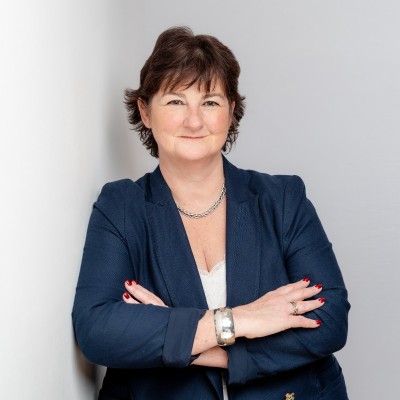


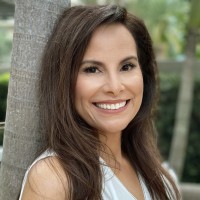
For Rosalinde Rosado, career transition is not simply about landing the next role—it is about helping people remember who they are when a job no longer defines them.
By Helen Davis, Presales Specialist, Humans of Fuzia
interviews founders and leaders about the real patterns behind entrepreneurship, leadership, and business growth.
August 10, 2026
When a career ends unexpectedly, the first thing people often lose is not their résumé. It is their sense of who they are.
For Rosalinde Rosado, that realization became the foundation of URLaunchPad, a career-transition practice built around a simple idea: people navigating professional change need more than tactics. They need someone to help them remember their own value.
Rosado’s journey into entrepreneurship began organically. With a background in human resources, she had been helping friends and family with résumés and interview preparation. Then her son was born prematurely and became a NICU baby, forcing her to leave the office and reconsider what work could look like. She began building the business that became URLaunchPad.
The name captures her philosophy. A launchpad is the space between one chapter and the next—a place to gain direction before moving forward.
That need is relevant in a labor market experiencing continued churn. Challenger, Gray & Christmas reported that U.S. employers announced 217,362 job cuts in the first quarter of 2026, the lowest Q1 total since 2022. For executives who have spent 10, 15 or even 18 years inside one organization, Rosado says the psychological shock of an involuntary transition can be as significant as finding the next role.
Her work therefore begins before the résumé.
Executives can arrive frightened, uncertain and disconnected from the version of themselves that once felt capable. Rosado helps them rebuild that confidence while navigating the mechanics of career marketing: positioning, networking, interview preparation and the broader system required to become visible in today’s job market.
Her own understanding of careers has changed too. Ten years ago, she imagined scaling into a larger team. Today, she questions whether more scale is automatically better.
“Maybe I don’t want to scale as much.”
For Rosado, the question is not whether a business can grow, but what growth requires in return. More clients can mean more relationships, more responsibility and more people needed to deliver the work. Eventually, growth can begin taking from the life the business was meant to support.
That has led her toward a more intentional model: remain a solopreneur, maintain corporate contracts alongside individual clients, and choose the amount of work that feels sustainable.
Another thread runs through her story. Looking backward—from helping classmates find their voice as a child to coaching executives later in life—she realized she had been doing essentially the same thing all along.
“I was always coaching.”
That insight is central to her work. Career transition is not simply about finding another position; it can be about recovering the thread of identity beneath changing job titles.
For career coaches and consultants, Rosado’s approach offers a useful distinction: tactics help someone enter the market, but confidence and identity influence how they navigate it. Her audience needs both.
The wider career-transition field faces a similar challenge: helping experienced professionals adapt to less linear career paths, where professional identity can be deeply tied to one employer. The work increasingly requires practical career strategy alongside the ability to help people make sense of change.
Execution Tip
Write down three moments in your career when someone came to you for help before they formally called it your expertise. Find the thread connecting them. It may reveal the problem you are uniquely positioned to solve.
Rosado’s version of entrepreneurship is not about carrying the whole world. It is about knowing what you are willing to carry—and what you are not.
That may be the more sustainable definition of growth: not building the biggest business possible, but building one that still leaves room for the life around it.
Rosalinde Rosado | LinkedIn