



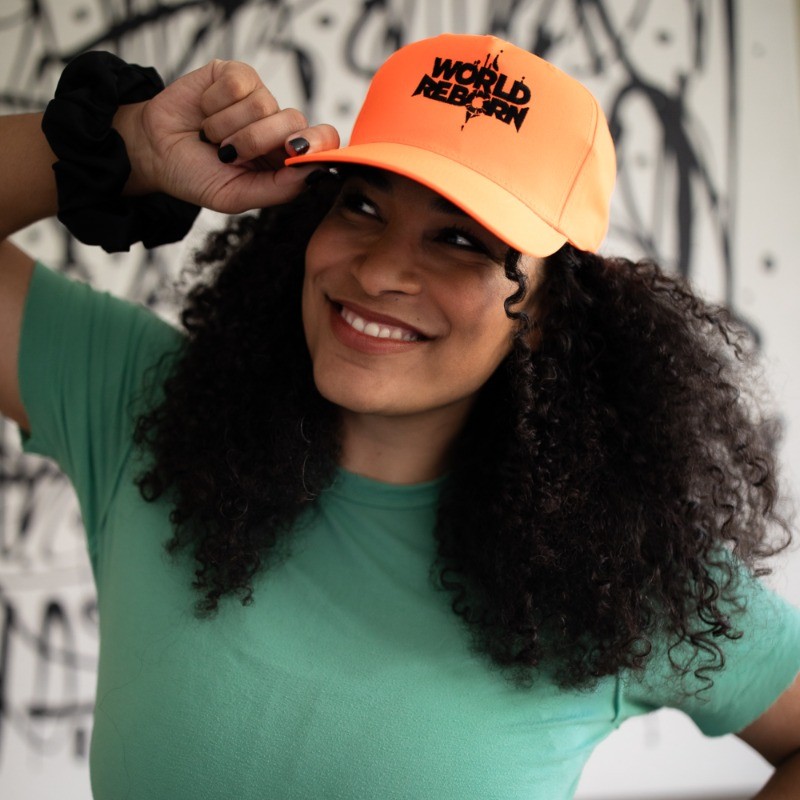
Jessica Murrey spent years helping young activists navigate conflict in some of the world’s most difficult environments. Now she is bringing those lessons into gaming—building a platform designed to turn Gen Z from players into participants in real-world change.
By Helen Davis, Presales Specialist, Humans of Fuzia
interviews founders and leaders about the real patterns behind entrepreneurship, leadership, and business growth.
August 10, 2026
What if the same mechanics that make people powerful inside a game could help them become more powerful in the real world?
For Jessica Murrey, that question became the foundation of W!CKED SAiNTS Studios.
Before becoming a founder, Murrey worked in international peacebuilding, training young activists and leaders in countries including Burundi, Nigeria, Colombia and Myanmar. Her work focused on a deceptively simple principle: attack the problem, not the person.
Today, she is applying that philosophy at a completely different scale.
W!CKED SAiNTS Studios combines peacebuilding, behavioral science, engineering, gaming and entertainment to create interactive experiences designed to activate Gen Z around real-world issues. Its platform, World Reborn, blends an interactive story game with real-world quests sponsored by brands.
Players do not simply earn virtual rewards. They can earn real-world rewards for making real-world impact.
The model is ambitious because Murrey is trying to solve a problem that extends far beyond gaming: how do you give young people the skills and agency to participate in solving the world’s hardest problems?
Her answer begins with engagement.
Rather than asking young people to consume another educational message, W!CKED SAiNTS puts them inside a story and gives them opportunities to act. Real-world creators, nonprofits and brands can become part of the ecosystem, helping connect the virtual experience to tangible action.
But creating the product is only half the entrepreneurial battle.
For Murrey, one of the biggest challenges has been discovery. As changes in app and platform ecosystems make it harder for users to find new games, building something valuable does not automatically mean people will see it.
The company has therefore designed distribution into the product itself. Creators can help drive traffic, nonprofits can bring communities of young people into the platform, and brands can participate in and promote real-world activations.
It is a deliberately interconnected model—but scaling still requires resources.
Fundraising has become another major pressure point. Murrey says the venture funding environment has changed significantly, with investors increasingly expecting startups to demonstrate a large audience earlier than founders once anticipated.
That shift has forced W!CKED SAiNTS to become more creative about growth.
“We have to figure out how to be really scrappy and clever to get it scaled.”
The constraint has also reinforced something important about the company’s model: it does not have to depend entirely on venture capital. Partnerships with brands, creators and nonprofits can become part of the growth engine.
That flexibility matters because Murrey’s vision extends beyond a successful product.
At the heart of her work is a belief developed during her peacebuilding career: conflict itself is not necessarily the problem. The way people respond to conflict can turn disagreement into violence, or turn it into an opportunity to solve something together.
For Murrey, that principle applies to everything from inequality and poverty to the everyday challenge of working with people we strongly disagree with.
Her definition of honest entrepreneurship follows the same philosophy.
Principles matter most when they become inconvenient.
For Murrey, that means being transparent with employees, investors and customers about where the company stands, including the risks and uncertainties of building a startup. It also means remembering that a company is ultimately made by its people, not simply its product.
Execution Tip
Identify one growth problem your product currently depends on someone else solving. Ask: Can I redesign the product so that the solution becomes part of the business model itself?
Jessica Murrey’s story is ultimately about taking an old lesson into a new medium.
The peacebuilder who once trained young people to transform their communities is now building a world where they can practice doing it.
The game may be virtual.
The impact she wants from it is anything but.
Jessica Murrey | LinkedIn