


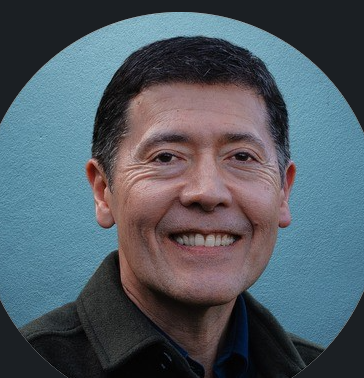
Long before he coached leaders on emotional intelligence, Michael Neuendorff learned the hardest business lesson of all: growth requires letting other people fail.
At fifteen, in a rural Arizona town with few jobs for someone his age, Michael Neuendorff talked a bicycle-parts distributor into selling him wholesale inventory, then resold it to his friends for less than the local bike shop charged. It worked well enough that the shop owner eventually complained. It also planted an instinct that resurfaced decades later, at far higher stakes: Neuendorff would rather build something of his own than answer to someone else’s terms — a thread running through the story he shared in a recent conversation with Humans of Fuzia, the global platform where founders, executives, and coaches trade the unfiltered lessons rarely found anywhere else.
By 2008, Neuendorff had spent 13 years in corporate life and stood in line for a promotion. He left anyway, to start his own business coaching practice — in the middle of the worst U.S. recession in decades. “I wasn’t taking the economy into account so much,” he admits. His old corporate network yielded almost no clients; he joined seven professional organizations and networked relentlessly, learning that trust in an unfamiliar market takes time. “It took probably in some cases a year of showing up for people to believe… maybe I can trust him now.”
That patience became his operating principle. Today, coaching leaders on emotional intelligence, Neuendorff targets a specific failure mode: operators who are technically brilliant but struggle to communicate, motivate, or retain their teams. His coaching builds the self-awareness that makes functionally brilliant leaders worth following — directly lifting engagement and retention numbers companies often mistake for a culture problem.
He’s candid about what blocks growth for coaches like him: mistaking “service provider” for “business owner.” The former hoards control; the latter invests, delegates, and scales. Neuendorff runs his practice by deliberately tolerating employees’ mistakes — a policy, not a personality trait. “If you get angry every time you delegate to someone and they make a mistake, well, they’re not going to want to work for you anymore,” he says, naming perfectionism as the habit that keeps small practices small.
The clearest proof came from a sales executive he coached toward a promotion. The client had alienated coworkers by chasing deals that served customers but burdened colleagues, becoming an intense micromanager. Over seven months, they learned to say no to bad deals, hand control to their team, and carry that discipline into their personal life. They got the promotion. Not everyone believed the change was real; Neuendorff did — he watched it happen.
According to the International Coaching Federation, roughly 87,900 business and executive coaches now operate worldwide, and nearly a third of Fortune 500 companies lean on executive coaching for their leadership pipelines — a market mature enough that undifferentiated coaching no longer cuts it. Neuendorff’s answer: name a real pain point, build a repeatable method, and resist perfectionism long enough to let a team grow around you.
Execution Tip: Name one task you still do yourself out of fear someone else will do it imperfectly. Hand it off this week.
Leadership pressure, Neuendorff argues, is a design choice organizations make — and can unmake. The founders who build lasting practices aren’t the ones who avoid mistakes; they’re the ones who stop needing to control them.
Connect with Michael Neuendorff
- Website: bayareaexecutivecoach.com
- LinkedIn: https://www.linkedin.com/in/michaelneuendorff/