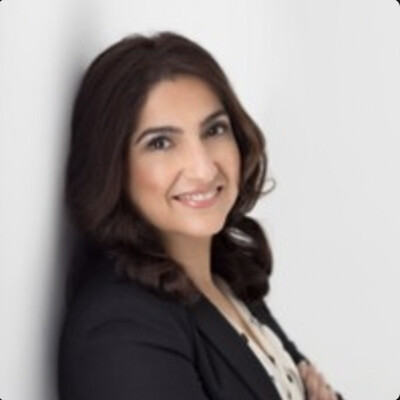



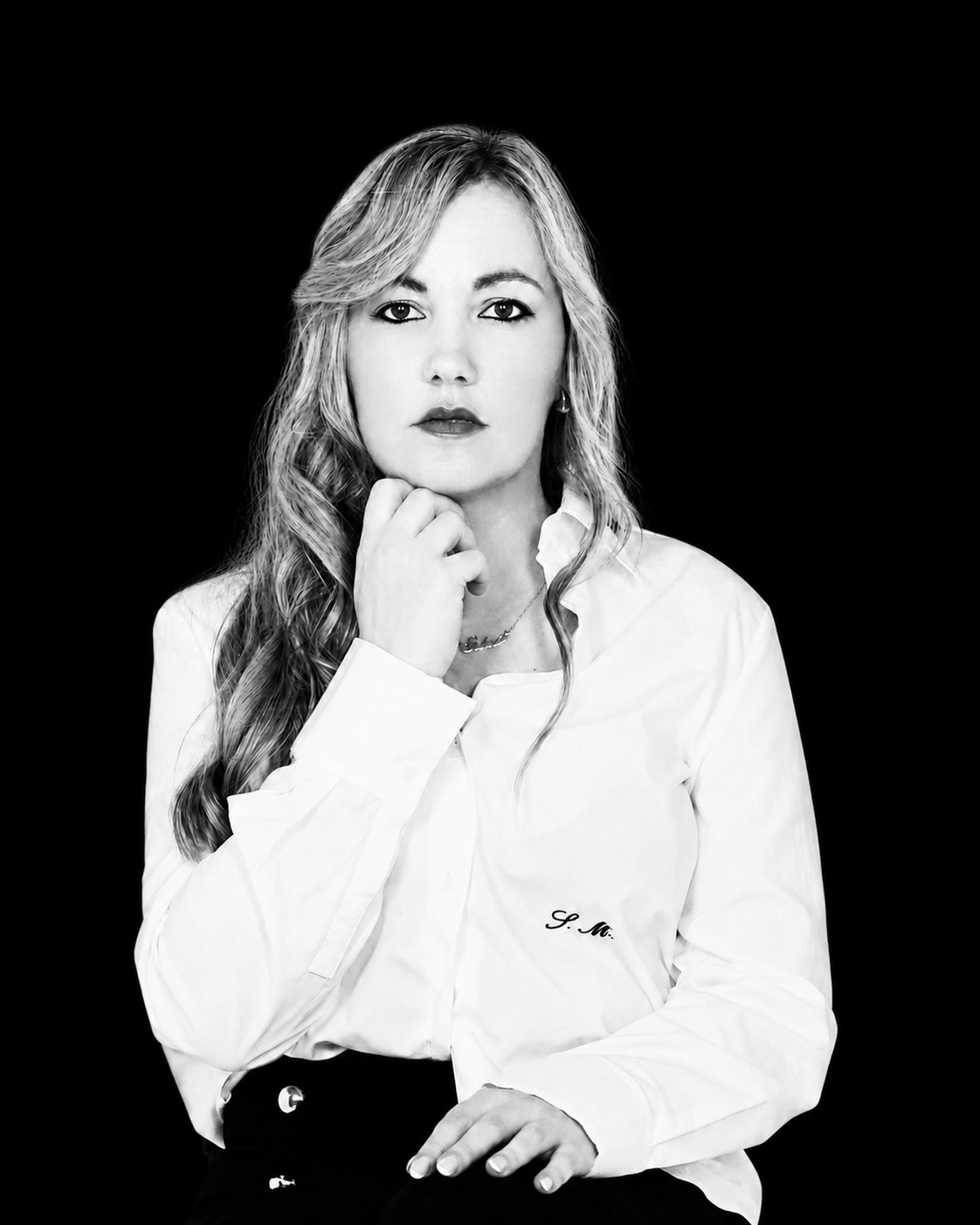
Silvia Mogas has spent more than two decades moving between industries, markets and countries, but the way she approaches work has remained remarkably consistent. The entrepreneur from Barcelona tends to start with the same questions: what problem are we trying to solve, who does it matter to, and what will actually move the business forward?
That mindset has taken her from hospitality, events and marketing into product, fintech, blockchain, digital assets, tokenisation and AI. In recent years, much of her work has centred on emerging technology, but she has never treated technology as the destination. What interests her is the point where a complex idea becomes useful, understandable and commercially relevant.
“My career has always been learning by doing. I study because I am curious, but I understand things properly when I have to build them, launch them, explain them or make them work in the real world.”
FROM REINVENTION TO ENTREPRENEURSHIP
Mogas began her career in customer experience, events and marketing before eventually leading marketing at Hilton in Edinburgh. The role gave her a strong commercial grounding and taught her to connect brand, customer behaviour and measurable business outcomes. By 2019, however, she was ready to rethink the direction of her career and moved to Asia.
Bali gave her time to reflect on what she wanted her work to contribute, while Singapore exposed her to one of the world’s most active fintech ecosystems. That environment brought her into blockchain and Web3, first through executive roles and later through entrepreneurship. Over the following years, her work expanded across DeFi, NFTs, Bitcoin, regulated digital assets, real-world assets and tokenisation, with AI becoming another important part of the picture.
The common thread was never a particular technology. It was the ability to translate complexity into something a market could understand and act on.
That thinking led her to found Blockchain Marketing Boutique in 2019. She had repeatedly seen technically capable teams struggle with questions that sat outside the product itself: how to position what they had built, how to reach the right decision-makers, how to earn Trust and how to create a credible route to market.
Today, Mogas and her team work with companies on strategy, positioning, go-to-market, partnerships, communications, PR and distribution. The work often begins before a campaign
exists, because the first task is usually to understand the business, the audience and the market well enough to know what should be communicated in the first place.
“Marketing only works when the business pieces around it make sense,” she says. “You need to understand the product, who it is for, why it matters and how it reaches the people who can actually move it forward.”
GROWING A SENIOR, SELECTIVE TEAM
At Blockchain Marketing Boutique, Mogas has deliberately avoided building the company around headcount. The model relies on a small group of senior specialists and deeper involvement with each client. Mogas stays directly involved in strategy, positioning and key relationships, while the team leads delivery across the different workstreams.
For her, that structure is closely linked to quality. Growth has to follow the reality of the business, and every new person has to strengthen the work rather than simply make the company look larger. It is a more deliberate way to scale, but one that allows clients to retain senior attention while the company develops broader capabilities around them.
The goal is also to build a business that does not depend on one person for every outcome. Mogas wants strategic judgement to remain close to the work while responsibility, expertise and execution are shared across a team that can grow with the client base.
That approach reflects a wider lesson she has learned as a founder: sustainable growth is not simply about doing more. It is about building enough structure around the business to absorb more opportunity without diluting the quality of the work.
VISIBILITY, DISTRIBUTION AND TRUST
One of the clearest ideas to come out of Mogas’s conversation with Humans of Fuzia was her view on visibility.
“You don’t have to be everywhere. You need to choose where.”
The point is particularly relevant at a time when founders are encouraged to publish constantly, maintain multiple channels and remain permanently visible. Mogas sees that pressure differently. More content and more activity can create the appearance of momentum, but they do not necessarily improve the business.
“If you make more noise, it doesn’t mean that you are more successful. It’s just noise.”
For her, visibility should be connected to a clear commercial or strategic purpose. That may mean reaching a specific client segment, building credibility with a particular ecosystem, strengthening relationships with partners or becoming known for a defined area of expertise.
This is why she treats distribution as a strategic discipline rather than a promotional afterthought.
A strong product still needs access to the right clients, investors, partners, communities and decision-makers. In technical markets, where Trust can take time to build, the quality of those connections often matters more than raw reach.
The same idea also sits behind Trust the Signal, the media platform Mogas founded to cover emerging technology, markets, Trust and real-world adoption. As AI makes information easier to produce and distribute, she believes the harder task will be deciding what deserves attention and which sources have enough evidence, judgement and context behind them to be trusted.
That thinking carries into personal branding as well. Speaking, media and content can all be valuable, but only when they reinforce a credible body of work. The objective is not constant visibility; it is being recognised for something meaningful by the people who matter to the work.
LEADERSHIP FOR THE LONG TERM
Mogas’s view of leadership has evolved alongside the businesses and teams she has built. Years of travelling, launching products and operating in fast-moving markets have made her more deliberate about what supports good judgement over time.
She sees personal performance as part of leadership, because a founder’s clarity, energy and decision-making inevitably shape the people and the business around them. In practice, that means clear priorities, discipline, energy management and enough perspective to separate what is urgent from what is genuinely important.
“As leaders, we spend a lot of time thinking about how to make companies more resilient, efficient and sustainable. I believe we need to apply the same discipline to ourselves. The quality of our decisions, our leadership and our creativity depends on the systems we build around the way we work and live.”
The result is a more intentional leadership style, focused on where time and attention are invested and on building teams, relationships and companies that can keep creating value over the long term.
EDUCATION, MENTORING AND OPENING DOORS
Education and mentoring have also become a consistent part of Mogas’s work. She lectures at EAE Business School and has been a guest lecturer on the MBA Innovation & Change Management programme at EM Normandie Business School in Dubai. She has mentored founders and students, served as an advisor and judge, and contributed to research on AI and blockchain.
Her work with women in technology sits within the same practical view of leadership. As a SheFi Chapter Lead for Spain and El Salvador, Mogas sees support between women as something that should translate into concrete access: introductions, recommendations, honest feedback, mentoring and the willingness to bring someone into a room they might not otherwise enter.
“Someone opening a door can change the direction of a career. Once you have access, part of the responsibility is making sure that door stays open for somebody else.”
For Mogas, this is also why teaching matters. Knowledge becomes more useful when it helps someone make a better decision, avoid an unnecessary mistake or see an opportunity they might otherwise have missed.
RECOGNITION THAT BACKS THE WORK
That emphasis on execution is also visible in Mogas’s public track record. She was named Marketing Leader of the Year 2024 in Dubai and included among the Global Top 100 Women of the Future in Emerging Tech, with additional recognition from LinkedIn for Marketing Strategy and Web3. She has spoken at more than 100 conferences internationally, including Mobile World Congress, South Summit Madrid, AIM Congress in Abu Dhabi and Taipei Blockchain Week.
She has also kept one foot in building. Hackathons are a recurring part of her work because they force ideas to be tested under time pressure and alongside technical teams. Her recognised projects include third place at the Polkadot Championship Hackathon in 2024, third prize at the Coinbase Developer Platform Hackathon in New York in 2025, a prize-pool win at Permissionless IV, and recognition across ETHGlobal events in Cannes, New York and Lisbon in 2026 for work spanning financial infrastructure, social impact and AI.
PURPOSE BEYOND BUSINESS
There is another part of Mogas’s work that sits outside her commercial activity but follows the same logic.
Animals have been part of her life since childhood. She grew up around horses and dogs, volunteered in shelters in Spain and the UK, and trained as a veterinary assistant when she was 17. Her dog Lola later inspired HeyLola Foundation.
In 2026, Mogas brought that interest into a technical environment at ETHGlobal New York. Working as a solo hacker, she built a Web3 layer for the foundation designed to make donations and sponsorship of shelter dogs easier and more transparent. The project was recognised as Best Existing Project Upgraded with Privy and later connected with animal organisations in the New York area.
What interested her was the opportunity to apply technology to a problem that already existed. The project became another example of the way she prefers to build: start with the real-world need, understand who is affected and then decide which tools can genuinely improve the outcome.
She expects the technologies she works with, from AI to digital assets, to keep changing. What she wants to preserve is the way she approaches them: stay curious, stay close to real problems, keep Trust and Ethics at the centre and keep building work that creates value beyond the initial idea.
“For me, purpose is not a fixed destination. It evolves as you learn, build and understand where your experience can create the most value.”