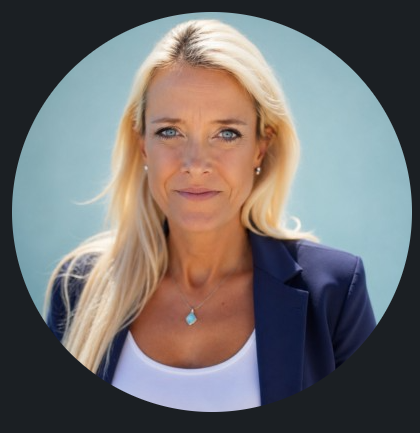




Founders are often expected to understand every part of their business. But as Nicole Sithithavorn points out, knowing how to run a business does not automatically mean knowing every function within it.
Most founders enter entrepreneurship with a particular strength. Some know how to sell. Others know how to deliver a product or service. What they may not know is how to manage the financial complexities that come with growing a company.
That is the gap Nicole’s fractional CFO practice helps address.
Working primarily with US-based businesses, Nicole and her team of four other CFOs become an embedded part of their clients’ leadership teams, overseeing the finance function. Their experience spans construction, manufacturing, professional services, nonprofits, and private medical practices, with clients ranging from businesses generating less than $1 million to those exceeding $100 million in revenue.
The Skill Gap Behind Growth
Nicole has yet to meet anyone who knows every aspect of a business, including herself. For founders, that reality can create a steep learning curve.
Someone with strong operational expertise may know exactly how to deliver for customers but struggle with sales and financial management. A founder with a sales background may understand how to acquire customers but find operational execution and financial oversight more challenging.
Financial management can be particularly difficult because business finances are sensitive and are often not openly discussed with employees.
Rather than assuming every business needs the same level of support, Nicole’s firm offers different entry points, from startup and lighter offerings to full-service fractional CFO support. The common factor is that their clients want to grow.
Trust Can Matter More Than a Perfect Marketing Strategy
Nicole’s business has grown through a combination of digital marketing and referrals. As her referral network has developed, the balance between the two has evolved.
But finance is a sensitive subject, which can make referrals more difficult. Business owners may have financial concerns without openly talking about them.
Nicole believes the answer is not to overcomplicate client acquisition. Her approach is consultative: understand the business, explain what could help, and be honest about whether her team is the right fit.
Sometimes, that means telling a potential client they actually need a controller rather than a fractional CFO.
That willingness to say “we’re not the right fit” reflects a broader lesson in entrepreneurship: credibility is built not only by knowing what you can do, but also by knowing what you cannot.
The Three Challenges Founders Keep Facing
Across her client base, Nicole sees three recurring concerns: staffing, liquidity management, and understanding whether the data is strong enough to measure business performance.
Hiring has become particularly challenging as AI-generated applications increase the volume of candidates, making it harder for businesses to identify the right people efficiently. Retention remains another concern, while healthy liquidity and understanding the financial impact of front-end business activities continue to influence decision-making.
For small businesses, these challenges are rarely isolated. Staffing, marketing, operations, and financial performance often intersect.
Your Time Is a Business Asset
Nicole’s biggest early mistake was not using her time as intentionally as she could have during the first six months of the business.
Her lesson is simple: founders need to be deliberate about where they spend their time.
If a founder is spending hours on tasks that someone else can perform at a lower cost, that time may be better invested in activities that require the founder’s expertise and have greater potential value for the business.
Execution Tip: Look at your weekly responsibilities and ask: Does this task require me, or does it simply need to get done? That distinction can help founders identify what to delegate, what to improve, and where their highest-value contribution actually lies.
Nicole’s journey offers a practical reminder for entrepreneurs: building a business does not require knowing everything. It requires recognizing where your expertise ends, bringing the right people into the gaps, and being intentional about how you use your time and resources.