


The world’s greatest challenges cannot be solved by the same mindset that created them.
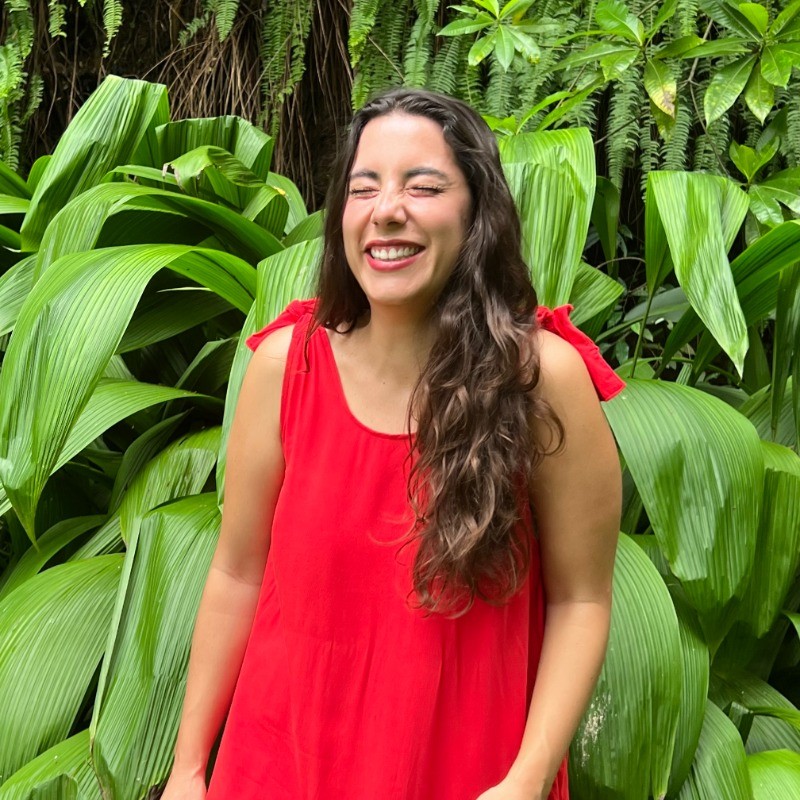
That realization transformed Carolina García’s career—and ultimately inspired her to build an entirely new kind of organization.
During a recent Leadership Conversations session hosted by David Bishop, leadership advisor and executive coach, García reflected on a remarkable journey that spans environmental advocacy, global corporate sustainability, and now regenerative leadership. Her story suggests that meaningful systems change requires far more than better strategies or stronger policies. It demands a transformation in how leaders relate to themselves, one another, and the living world.
From Climate Advocacy to Corporate Transformation
García began her career as a journalist before transitioning into international environmental policy, joining the World Wildlife Fund during one of the defining moments in climate leadership.
Working alongside global negotiators during the creation of the Paris Climate Agreement and the United Nations Sustainable Development Goals, she witnessed firsthand the power—and limitations—of global cooperation.
Her next chapter surprised even her.
Joining Anheuser-Busch InBev, García helped lead sustainability initiatives across Latin America before moving into a global innovation role based in New York. There, she helped build collaborative sustainability programs that united major multinational companies—including consumer brands traditionally viewed as competitors—to accelerate environmental innovation through startup partnerships.
While the work demonstrated what corporate collaboration could achieve, it also revealed a deeper truth.
Incremental progress alone would never be enough.
The Leadership Lesson Found in Stillness
The turning point in García’s journey came not inside a boardroom, but during a silent retreat led by Buddhist monastics and climate leaders.
After years of driving ambitious sustainability initiatives, she finally paused long enough to recognize something she had been carrying beneath constant activity.
Grief.
Not simply grief for the accelerating environmental crisis, but grief for the growing realization that many efforts to solve planetary problems were still operating within the same extractive mindset that had created them.
As she reflected during the conversation, true transformation begins by recognizing that humanity is not separate from nature but inseparably connected to it.
That shift fundamentally changed her understanding of leadership.
Building Organizations That Heal While They Scale
Inspired by that experience, García co-founded Myzelio, an organization designed to help companies, philanthropic institutions, and global organizations accelerate sustainability through a fundamentally different leadership philosophy.
Rather than functioning as a traditional consulting firm, Myzelio embeds alongside clients as strategic partners, helping organizations implement sustainability strategies while cultivating deeper cultural transformation.
Its work spans Fortune 500 companies, mission-driven businesses, and philanthropic organizations supporting environmental restoration around the world.
Yet García insists the organization’s greatest achievement is not found in its client work.
It is found within its own culture.
Through intentional rituals, reflective practices, poetry, meditation, and shared moments of presence, Myzelio seeks to create an environment where personal growth and organizational impact evolve together.
For García, the internal culture is itself a prototype for the regenerative future her team hopes to build.
Leadership Beyond Productivity
Throughout the discussion, David Bishop observed how García’s philosophy expands traditional ideas of organizational leadership.
Rather than measuring success solely through efficiency or performance, she focuses on cultivating awareness, connection, and purpose.
She believes organizations perform differently when people feel psychologically safe, deeply connected to one another, and aligned around meaningful work.
Instead of asking people simply to produce more, leaders should create conditions where individuals can discover their gifts and contribute them in service of something larger than themselves.
Execution Tip
Before trying to transform an organization, ask: “Does our internal culture reflect the future we hope to create?”
Authentic systems change begins with leaders who embody the principles they seek to advance.
Final Thoughts
Carolina García’s journey reminds us that leadership is not simply about improving systems.
It is about transforming the consciousness from which those systems emerge.
By combining sustainability, organizational development, and deeply human leadership practices, she offers a compelling vision for how businesses can move beyond incremental change toward genuine regeneration.
Through Leadership Conversations, David Bishop continues to explore the leaders challenging conventional thinking—demonstrating that the future belongs not only to organizations that innovate faster, but to those courageous enough to rethink the very foundations of leadership itself.
Connect with Carolina García
LinkedIn: Carolina Garcia | LinkedIn