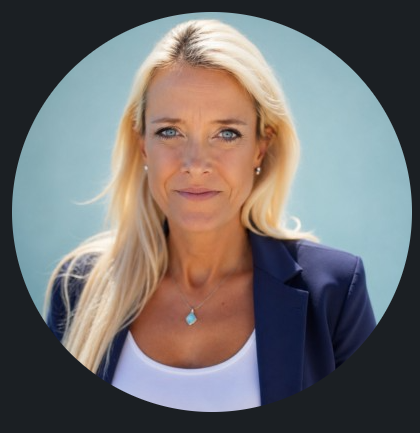



In a business environment where every new technology can quickly become the next “must-have,” Dr. Wendy Labat believes founders need to ask a more important question: Do you actually understand how to use the information and tools you are bringing into your business?
For Wendy, access to information is only the beginning. The real value comes from knowing how to interpret it, apply it, and pivot when it reveals that something needs to change.
That philosophy extends beyond technology. It shapes how she approaches visibility, relationships, and entrepreneurship itself.
Information Is Only Valuable When You Can Use It
Wendy sees one of the biggest challenges for founders today as moving from simply having access to tools and information to understanding what they mean for their specific business.
AI is a good example. Rather than adopting every new tool because it is trending, Wendy believes entrepreneurs need to be selective and understand how a technology can actually serve their business.
She uses ChatGPT in practical ways herself. When clients ask questions that can be answered with general information, she sometimes directs them to explore ChatGPT first and return if they still need strategic guidance. As a writer, she also uses it to help organize her thoughts when her mind is already full, then customizes the output to reflect her own voice.
For Wendy, technology is not a replacement for expertise. It is a tool that can create space for better thinking.
Visibility Is About Being Remembered
Wendy’s approach to visibility is equally intentional.
Years ago, her PR professional emphasized the importance of visibility. A mentor she has known for decades gave her an even simpler principle: wherever you go, make sure people know who you are, what you do, how to reach you, and how you may be able to help.
She has built that principle into her marketing through video, audio, written content, LinkedIn, and social media support.
But Wendy does not frame this as lead generation.
Her focus is on developing relationships and putting herself in places where the right people can discover her. Someone may not need her today, but they may remember her when a relevant opportunity or conversation arises.
That shift from chasing leads to building relationships reflects one of her broader entrepreneurial lessons: visibility creates possibilities, but integrity gives those relationships substance.
Understand the Process Before You Try to Scale It
Wendy identifies one of her earliest business mistakes as not understanding the full process of entrepreneurship.
She initially assumed business was primarily about sales: explain what you offer and wait for someone to say yes or no. Over time, she learned that there is a process behind building a sustainable business.
One lesson came through cash flow. Having sales on the books did not necessarily mean having money in the bank. Understanding how invoices turn into actual payments became an important part of understanding how the business worked.
That distinction is critical for founders who may be excellent at what they do but have not yet learned the mechanics surrounding it.
Execution Tip: Before adding another tool, marketing channel, or growth strategy, step back and map the process behind your business. Where does awareness become a relationship? Where does a sale become cash? Where does information become a decision? Knowing those connections can reveal what is actually missing.
Entrepreneurship Is More Than Having a Company
A business can have a name, a logo, customers, and even sales, yet still lack a clear understanding of how the business itself works.
For Wendy, that is where entrepreneurial maturity begins: understanding the entire process, recognizing what the numbers and information are telling you, and being willing to pivot when necessary.
Her story offers a practical reminder for founders navigating an increasingly noisy business landscape. You do not need every tool. You do not need to be everywhere. And you do not need to know everything.
You need to understand your business deeply enough to recognize what matters, communicate your value clearly, build relationships with integrity, and turn information into action.