



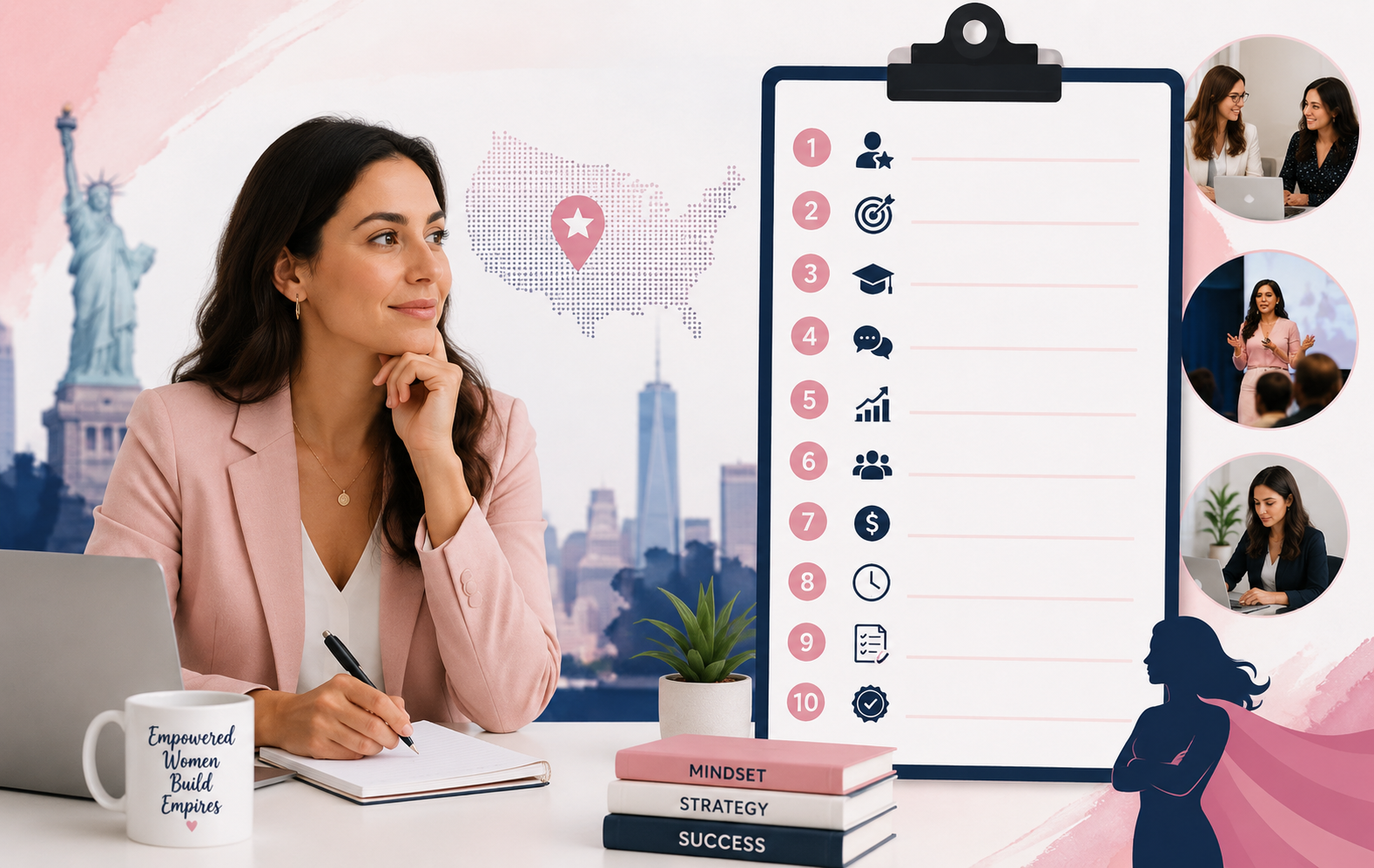
Every women entrepreneur coaching program promises transformation. But not all of them deliver it. Before you invest your time, money, and trust, you need to ask the right questions. This guide, informed by real conversations from our women leadership interview series, gives you exactly that.
At Humans of Fuzia, we have spent years listening to women founders, executives, and changemakers share their journeys. And one theme comes up again and again: the coaching experience that changed everything, or the one that didn’t. The difference almost always came down to what they asked, or failed to ask, before signing up.
If you are considering a women-focused coaching program in the USA right now, here are the ten questions that should be non-negotiable on your list.
What Every Women Leadership Interview Teaches Us About Coaching
We have conducted hundreds of women leadership interviews at Humans of Fuzia, speaking with entrepreneurs, coaches, and mentors across industries and cities in the USA. What stands out consistently is that the women who grew fastest were not the ones who found the most expensive program. They were the ones who found the right fit.
In one recent women leadership interview, Priya, a founder based in Austin, Texas, shared: “I wasted eight months in a group coaching program that was built for corporate managers, not entrepreneurs. The frameworks didn’t apply. The community wasn’t my people. I learned that lesson the hard way so you don’t have to.”
The ten questions below are drawn from exactly these kinds of conversations. Think of them as your pre-enrollment checklist.
1. Who Is This Program Actually Built For?
This sounds obvious, but most women skip it. A program branded as a “women entrepreneur coaching program” can mean very different things. Some are designed for solopreneurs just starting out. Others serve women scaling past the seven-figure mark. Some focus on corporate women pivoting to entrepreneurship.
What to ask:
• What stage of business is the typical participant at when they join?
• Does the program serve product-based founders, service providers, or both?
• What industry backgrounds do current participants come from?
The clearer the program’s target participant profile, the more focused the curriculum, and the more useful the community will be to you.
2. Can I See Real Results From Women Like Me?
Testimonials are easy to collect. Verifiable results are harder to fake. Before you commit, ask for specific outcomes from specific women, ideally in a similar industry or life stage to yours.
According to a 2023 report by the International Coaching Federation, only 42% of coaching clients worldwide say they were shown concrete evidence of results before enrolling, yet 84% said that evidence of outcomes was the most important factor in their decision. The gap is real, and the burden is on you to close it.
Ask the program coordinator to connect you directly with a past participant for a five-minute call. A confident program will say yes.
3. What Is the Coach’s Actual Background in Entrepreneurship?
This is one of the most underasked questions in any women leadership interview conversation about coaching. Many highly credentialed coaches have never built a business themselves. That is not automatically disqualifying, but it shapes what they can and cannot offer.
A coach who has personally navigated funding rounds, team building, burnout, and market pivots brings lived experience into the room. One who has not will lean more heavily on frameworks and theory. Both have value depending on what you need, so know the difference and decide which one serves your current chapter.
What to look for:
• Did they build and exit a company, or only coach others who did?
• Are their credentials from an ICF-accredited program?
• How recent is their hands-on business experience?
4. Is the Community a Real Community or Just a Facebook Group?
Many women join coaching programs for the peer community as much as the curriculum. But there is a wide spectrum between a thriving, active network and a dormant group chat that nobody opens after week two.
Ask to see the community space before you join. Look at how recent the posts are, whether the facilitator or coach participates regularly, and how members respond to each other. A community where women actively share wins, ask questions, and support one another is one of the highest-value elements of any women leadership development program, and it either exists or it does not.
5. How Much Direct Access Do You Get to the Lead Coach?
This varies dramatically between programs and is rarely spelled out clearly in the sales page. Some programs at a premium price point give you weekly 1:1 sessions with the lead coach. Others give you access to a team of junior coaches, with the named coach appearing only on recorded masterclasses.
Neither model is wrong. But you need to know which one you are buying. Get this in writing in the enrollment contract, not just in a sales conversation.
6. What Does the Refund or Exit Policy Look Like?
A reputable women entrepreneur coaching program in the USA should have a transparent refund policy. If a program cannot tell you what happens if the fit is wrong or life circumstances change, treat that opacity as a signal.
Standard good practice includes a trial period of one to two weeks, a clear policy on what is refundable and what is not, and an exit clause in multi-month commitments. Women who have been through our women leadership interview conversations consistently flag this as something they wish they had asked earlier.
7. Does the Program Address the Realities of Being a Woman in Business?
This question separates programs that are genuinely built for women from those that are simply marketed to them. Real women-focused coaching acknowledges the unique dynamics that shape entrepreneurship for women, including access to capital, bias in networking spaces, the invisible load of caregiving, and confidence gaps rooted in systemic, not personal, experience.
A program that ignores these realities in favor of gender-neutral business advice with a pink logo is not a women entrepreneur coaching program. It is a general business program with a marketing department.
8. How Is Progress Defined and Measured?
Transformation is hard to measure. Revenue is easy. The best coaching programs help you track both tangible business metrics and the mindset, clarity, and confidence shifts that support them. If a program cannot tell you how they measure participant progress, they may not be measuring it at all.
Strong programs typically offer:
• An intake assessment to establish your starting point
• Milestone check-ins throughout the program
• A clear definition of what a successful outcome looks like at the end
9. What Happens After the Program Ends?
The most durable coaching programs do not disappear the moment your enrollment period ends. They either build alumni communities, offer continuation paths, or structure their curriculum in a way that leaves you with systems you can run independently.
In every women leadership interview where we have asked about long-term outcomes, the women who continued to grow post-program were almost always connected to a lasting community or had a clear accountability structure to carry forward. Ask what the off-ramp looks like before you commit.
10. Does This Feel Like a Place Where You Would Truly Belong?
This last question is the one most likely to be dismissed as soft. It is not. Belonging is the foundation of learning. When women feel genuinely seen and safe within a community, they take bigger risks, ask harder questions, and grow faster than they would in a technically superior program where they feel like an outsider.
Attend a free session, a webinar, or a community call before you commit. Notice whether the language, the stories, and the examples resonate with your experience. Trust that instinct. Humans of Fuzia was built on exactly this belief: that women grow best when they are surrounded by other women who genuinely get it.
The Right Program Is Out There. Go in With the Right Questions.
The women leadership interview conversations we have hosted at Humans of Fuzia have made one thing abundantly clear: the coaching programs that changed lives were not always the biggest or the most visible ones. They were the ones where the woman felt understood, challenged in the right direction, and part of a real community.
Use these ten questions as your filter. Write them down before your enrollment call. And if a program struggles to answer them directly, that tells you something too.
If you are a woman who has built something, navigated something, or learned something the hard way in your entrepreneurial journey, we want to hear your story at Humans of Fuzia. Your experience could be exactly what another woman needs to read before she makes her next big decision.
Share your story at humansoffuzia.com and become part of a women leadership interview series that is changing how women support each other in business.
Frequently Asked Questions
What is a women entrepreneur coaching program in the USA?
A women entrepreneur coaching program in the USA is a structured learning and mentorship experience specifically designed to help women build, grow, or scale their businesses. These programs range from short-term group cohorts to year-long 1:1 engagements, and are often led by coaches who specialize in female leadership development, business strategy, or mindset work.
How is a women leadership interview series different from a regular coaching program?
A women leadership interview series, like the one hosted by Humans of Fuzia, is a content and community format where established women leaders share their journeys, lessons, and insights through in-depth interviews. It is not a coaching program itself, but it often surfaces recommendations, patterns, and stories that help other women make smarter decisions about which coaching programs to choose.
How much do women entrepreneur coaching programs in the USA typically cost?
Costs vary widely. Group coaching programs can range from a few hundred dollars to several thousand dollars for a cohort. High-end 1:1 executive coaching programs for women entrepreneurs in the USA can run anywhere from five thousand to fifty thousand dollars or more annually. Always evaluate cost in relation to specificity of outcomes, level of access, and quality of community.
Are women-only coaching programs more effective than mixed-gender programs?
Research and lived experience both suggest that women often speak more freely, take more risks, and form stronger peer bonds in women-only or women-led environments. Whether this translates to better outcomes depends on the individual. The most important factor is fit, not gender composition alone.
Where can I find a women leadership interview to help me make this decision?
Humans of Fuzia publishes an ongoing women leadership interview series featuring founders, executives, and coaches across industries. You can explore the archive and submit your own story at humansoffuzia.com.