


What if the biggest advantage in artificial intelligence isn’t writing the code—but understanding the people who will use it?
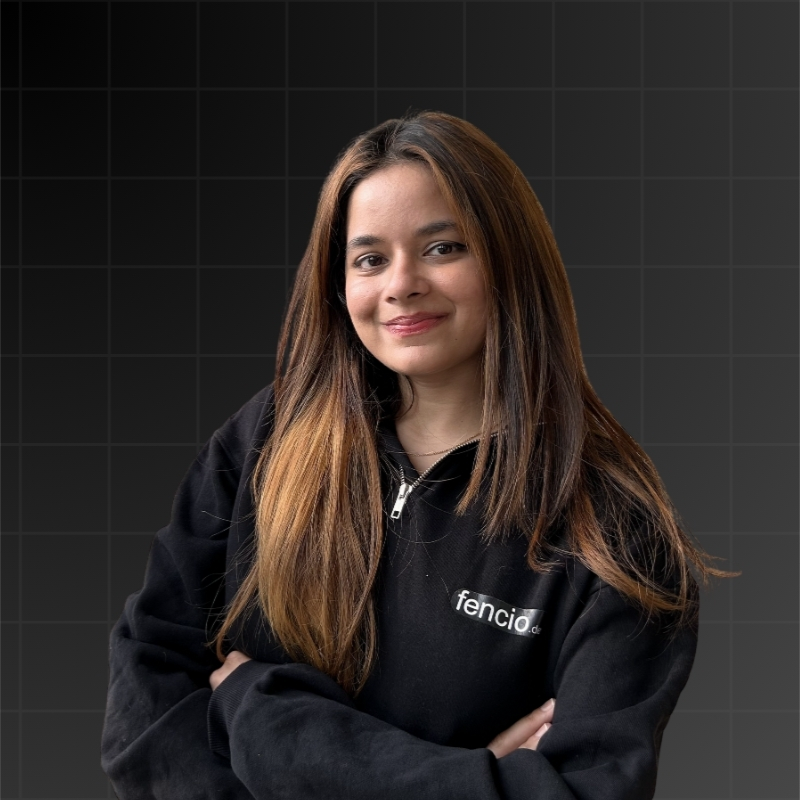
As AI transforms every industry, technical innovation alone is no longer enough. The startups that stand out are those that combine breakthrough technology with exceptional storytelling, market understanding, and human-centered design. For entrepreneur Krishnaa Nair, that philosophy has shaped the rapid evolution of Fencio, an AI security startup preparing to scale globally.
At Humans of Fuzia, a global thought-leadership platform dedicated to leadership, entrepreneurship, coaching, women empowerment, and socially conscious business, we celebrate founders who challenge conventional thinking. Krishnaa’s journey demonstrates that entrepreneurship isn’t defined by where you start—it’s defined by your willingness to learn, pivot, and build relentlessly.
From Journalism to Building an AI Startup
Krishnaa’s entrepreneurial path defies the traditional startup narrative.
Unlike many AI founders, she did not come from an engineering background. She studied journalism, built her career in branding and direct-to-consumer marketing, and openly admits she “was a very poor student” in computer science.
Yet that difference became one of Fencio’s greatest strengths.
Founded alongside long-time friends, the company initially explored multiple industries—including marketing and fintech—before discovering its strongest opportunity in AI security.
“We pivoted a lot… until we found something that was a solid rhythm for all of us.”
Today, after successfully raising a pre-seed round, Fencio is relocating its operations to San Francisco through the Entrepreneurs First accelerator, positioning itself closer to global AI markets and enterprise customers.
Why Distribution Is Becoming More Valuable Than Technology
Krishnaa believes one of entrepreneurship’s biggest shifts is happening outside the product itself.
“I think the market… is extremely saturated.”
With AI making product development faster and more accessible, competitive advantage increasingly comes from visibility, positioning, and storytelling.
“It’s about who is the person behind the product… rather than what is the unique thing about the product itself.”
While engineers naturally focus on features, Krishnaa approaches every decision through the lens of customer experience.
“What do I want someone to feel?”
Whether designing a website, speaking with enterprise clients, or shaping marketing campaigns, her goal is to translate technical complexity into emotional clarity—a skill that has become increasingly valuable in today’s AI economy.
Leading Without a Technical Background
One of Krishnaa’s most powerful insights comes from confronting self-doubt.
Surrounded by highly experienced security engineers, she initially questioned whether she belonged in conversations about deeply technical products.
“I don’t come from a tech background… Am I the right person to be sitting in this room?”
Over time, she reframed that uncertainty.
“Nobody really knows what they’re doing anymore. Everybody is just figuring it out as they go along.”
Rather than seeing her non-technical background as a weakness, she now recognizes it as a competitive advantage that enables her to bridge technology and human understanding.
Scaling Through Credibility
For Fencio, the greatest challenge isn’t building the product—it’s earning trust.
As an early-stage AI security company entering conversations with large enterprises, the team must convince experienced leaders to rethink longstanding assumptions about cybersecurity.
Krishnaa believes success depends on communicating unique insights in ways decision-makers immediately understand.
That ability to translate expertise into relevance is becoming one of the defining skills of modern entrepreneurship.
Execution Tip
When launching an innovative product, don’t start by explaining the technology. Start by explaining how it changes someone’s life or solves a problem they already recognize. Products are remembered when people understand how they feel—not just how they function.
What Honest Entrepreneurship Means
For Krishnaa, entrepreneurship demands radical self-awareness.
“I feel like entrepreneurship is one of the most vulnerable journeys someone can take.”
She believes founders grow faster by studying failures rather than celebrating successes.
“Your failures tell you why something didn’t work.”
Equally important is creating authentically. Instead of following trends or publishing AI-generated content that sounds like everyone else, she believes entrepreneurs should build from lived experience and personal conviction.
“If it’s not something that I have faced, it’s just not something that I want to be doing.”
For Krishnaa, honest entrepreneurship is ultimately about building something that reflects who you truly are.
Conclusion
Krishnaa Nair’s journey proves that great founders are not defined by technical credentials—they are defined by curiosity, resilience, and the courage to keep evolving. Through Fencio, she is helping shape the future of AI security while demonstrating that the strongest competitive advantage often comes from understanding people as deeply as technology.
Through stories like Krishnaa’s, Humans of Fuzia continues to empower entrepreneurs, innovators, coaches, and business leaders with actionable insights on leadership, entrepreneurship, women empowerment, AI innovation, startup growth, and sustainable business leadership.
Connect with Krishnaa Nair
- LinkedIn:Krishnaa Nair | LinkedIn