


The best leaders don’t succeed because they have all the answers.
They succeed because they never stop asking better questions.
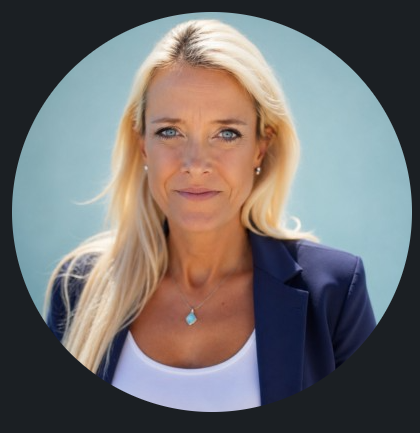
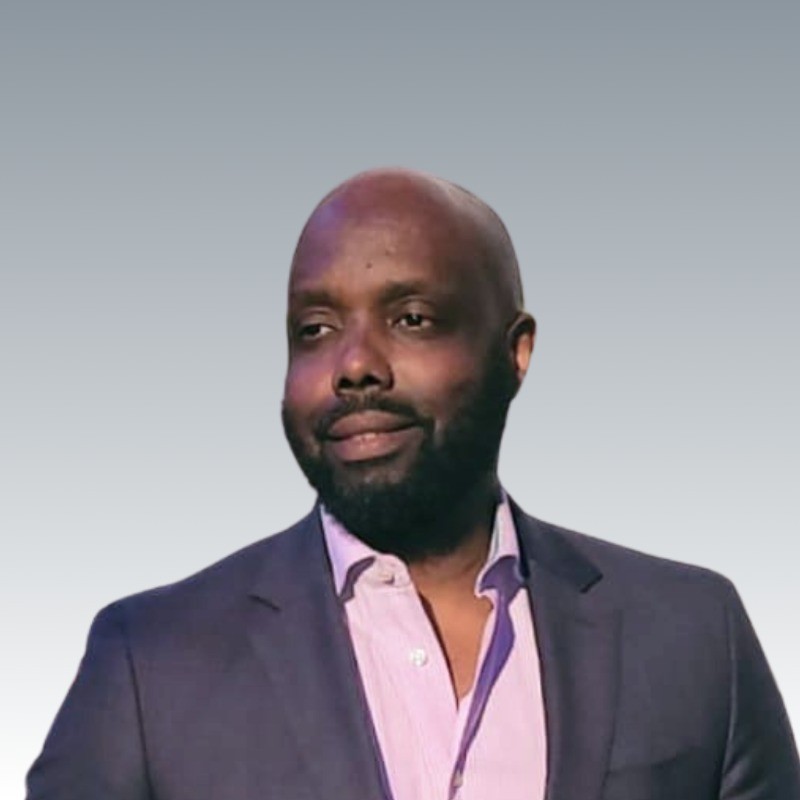
That philosophy emerged throughout a recent Leadership Conversations session hosted by David Bishop, leadership advisor and executive coach. His guest, Khalil Abdul-Karim, Founder and CEO of System Fresh Consulting, shared how curiosity, operational discipline, and relationship-driven leadership have enabled him to build a global consulting firm that helps organizations scale through strategic growth and operational transformation.
Rather than positioning technology as the solution, Abdul-Karim argues that sustainable growth begins with leadership.
Building Organizations That Fill the Right Gaps
When Abdul-Karim founded System Fresh Consulting over a decade ago, the company initially operated as an extension of executive leadership teams, serving as acting COOs and strategic operators for growing businesses.
As client needs evolved, so did the firm.
Today,System Fresh Consulting combines executive advisory services with AI architecture, platform engineering, financial strategy, research intelligence, and operational consulting—all designed to meet organizations wherever they are in their growth journey.
“Our role is to meet companies wherever they are in the growth lifecycle,” Abdul-Karim explained.
Instead of selling predetermined solutions, his team first identifies operational gaps before determining whether technology—including AI—is the appropriate answer.
AI Should Improve Business Processes—Not Replace Leadership
While artificial intelligence has become a dominant topic across industries, Abdul-Karim believes many organizations misunderstand its true value.
His firm doesn’t build AI products looking for problems to solve.
Instead, AI becomes one component of a broader operational strategy.
He shared the example of a manufacturing client where AI dramatically reduced equipment downtime by identifying production bottlenecks in real time. Rather than waiting for engineers to diagnose failures overnight, plant leaders could resolve issues remotely within minutes, significantly improving operational efficiency.
For Abdul-Karim, successful AI implementation isn’t about automation for its own sake—it’s about enabling faster decisions, better visibility, and stronger business outcomes.
Curiosity Is the Foundation of Leadership
As the discussion shifted toward leadership, David Bishop highlighted one quality that stood out immediately.
“I love your commitment to being curious,” Bishop remarked.
For Abdul-Karim, curiosity isn’t simply a personality trait—it is a leadership discipline.
After years of focusing almost exclusively on execution, he made a conscious decision to reconnect with what first inspired him: learning from people.
“I need to get back to being curious.”
That mindset now shapes both his consulting work and his role as a strategic advisor to entrepreneurs.
Rather than surrounding himself with agreement, he intentionally seeks diverse perspectives and hires experts who challenge his thinking.
“I tell my team, ‘You don’t work for me. You work for System Fresh Consulting. That’s who I work for too.'”
By placing the organization’s mission above individual authority, Abdul-Karim creates alignment that empowers people to make decisions based on what’s best for the company—not the CEO.
Leadership Is About Connecting the Pieces
One of the strongest themes throughout the conversation was Abdul-Karim’s belief that leaders aren’t expected to know everything.
Instead, they create value by recognizing patterns others cannot.
“We are the glue for ideas,” he explained. “Ideas are a puzzle. They give us all the pieces. Our one skill is to put those pieces together in a way no one else on the team can.”
That perspective closely aligned with Bishop’s observation that effective leaders act as harvesters of ideas, creating environments where diverse thinking leads to stronger organizations.
Execution Tip
In your next leadership meeting, ask one question before offering your opinion: “What perspective am I missing?”
Creating space for curiosity often uncovers better solutions than relying on experience alone.
Final Thoughts
Khalil Abdul-Karim’s leadership philosophy demonstrates that operational excellence begins long before technology is implemented.
Organizations grow when leaders remain curious, empower talented people, and focus relentlessly on solving meaningful business problems rather than chasing trends.
As companies navigate increasingly complex markets, curiosity may prove to be one of the most valuable strategic advantages a leader can cultivate.
Through Leadership Conversations, David Bishop continues to bring together accomplished founders and executives whose experiences offer practical lessons on leadership, organizational growth, and building businesses designed to thrive in an era of constant change.
Connect with Khalil Abdul-Karim
LinkedIn: https://www.linkedin.com/in/khalilabdulkarim-businessstrategist/