


What if the real competitive edge in 2026 isn’t scale, funnels, or automation—but the courage to grow slower, more human, and more honest than everyone else?
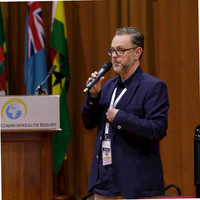
That’s the lens through which Robin Lockhart—award‑winning coach, social entrepreneur, and founder of Catalyst in Communities—builds his work. His approach stands in sharp contrast to the high-speed, high-burn growth playbooks dominating entrepreneurial culture.
At Humans of Fuzia (HOF)—a global thought-leadership platform at the intersection of leadership, entrepreneurship, coaching, women empowerment, and socially conscious business—we see this pattern repeatedly: the most sustainable leaders are those who design their businesses around impact, not ego. Lockhart is one of them.
“The impact of what I do is more important than the price of it.” – Robin Lockhart
From Creative Industries to Human Transformation
Lockhart started in music and the creative industries, but a deeper question kept pushing him forward: Was he really changing lives—or just moments?
Working with young people in marginalized communities, he saw a ripple effect:
- Growth in individuals
- Change in their families and friends
- Shift across wider communities
With no formal training at first, he pursued linguistics, hypnotherapy, and change modalities to understand why his work was creating transformation. The breakthrough:
“We don’t really need to change reality so much with people, but we need to help them to change their relationship to their thinking.”
This insight now underpins his work with both at‑risk youth and senior executives, proving that mindset, not market segment, is the real territory of leadership.
The 2026 Leadership Reality: Anxiety, Complexity, and Growth at All Costs
Lockhart’s vantage point spans NGOs, communities, and boardrooms. The same themes keep surfacing in 2026:
- Time and capacity strain for founders and solopreneurs
- Rising anxiety in leaders facing unstable economies, conflict, and constant change
- Growth complexity—how to scale without losing authenticity or impact
- Pressure to perform: larger teams, bigger stages, higher expectations
He challenges the myth that anxiety is always pathology:
“Increases in anxiety and depression… are a perfectly rational response to the way that the world is at the moment.”
For entrepreneurs and coaches, this reframes “mindset issues” as strategic leadership work, not personal failure.
Designing a Business Around Impact, Not Headcount
Lockhart runs a lean, agile nonprofit and a high-touch private practice. He intentionally resists the pressure to build a 100‑person organization.
His growth systems center on:
- Delegation and team design: specialists brought in for film, fashion, sport, or group facilitation
- Organic client acquisition: word‑of‑mouth, trust, and lived impact over heavy ad spend
- Group work as leverage: using collective intelligence to deepen transformation and scale results
- Clarity of purpose: prioritizing social impact and human change over vanity metrics
This is a blueprint for coaches and small business leaders who want scalable, humane growth—not just bigger numbers.
Execution Tip
Tomorrow, audit one offer or service through an “impact-first” lens.
Ask yourself:
- If I stripped away revenue targets, what is this really trying to change for people?
- Where am I overcomplicating delivery—and where could a smaller, more focused format (e.g., a curated group session) create deeper results?
Then choose one concrete adjustment: a clearer ICP, a tighter promise, a higher-touch experience, or better follow‑through—all aligned with genuine impact.
Why This Matters for the Future of Leadership
Lockhart’s philosophy is a direct challenge to extractive growth logic:
“Business decisions can’t be just made on ‘does this make us money?’ We have to look at the ramifications… if it’s at the expense of anybody else, I’m not into that.”
For founders, coaches, and women in leadership, this is the emerging edge of socially conscious entrepreneurship: build systems, teams, and offers that scale without sacrificing humanity.
At Humans of Fuzia, we spotlight leaders like Robin because they model what modern growth can look like: profitable, principled, and profoundly human. For coaches and small business entrepreneurs navigating 2026, these are not just stories—they are strategic templates.