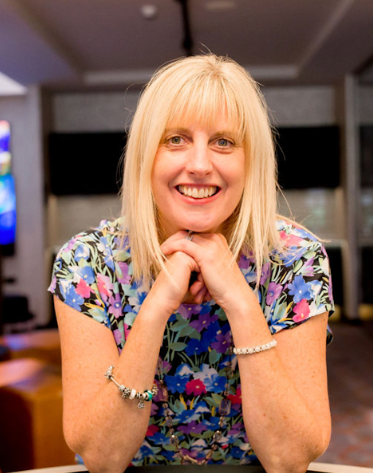




Julia Vendramin is a serial entrepreneur and co-founder of Qmunity, an AI-led marketing agency on a mission to make visibility and growth accessible to small businesses. After years of navigating the corporate world, building and exiting ventures, and working in deep tech and blockchain, she saw firsthand how costly and complex marketing can be for early-stage companies. Today, she is channeling that experience into tools and workflows that help founders scale smarter, not harder—while championing women’s leadership and the power of women supporting women in a still largely male-dominated tech ecosystem. Her story speaks directly to Humans of Fuzia’s global community of 5M+ people committed to She for She and He for She.
Q&A
Q: What first inspired you to become an entrepreneur? Was it a person, a moment, or a challenge?
Julia: Interestingly, it was almost none of those three. From the moment I started working, I knew I wanted to build something of my own. I was never really drawn to the idea of a traditional corporate career in a company I didn’t own or lead. But I come from a traditional German background, and my parents encouraged me to follow a more conventional path—study business, maybe become a lawyer, work in corporate. So I went to university and then joined a corporate in the fashion industry, Hugo Boss. After a year, I realized very clearly that this wasn’t the world I wanted to be in, and that I truly wanted to build my own business.
While I stayed there about five years, I launched my first entrepreneurial venture on the side—a design-to-marketplace for small and independent boutiques. That was around 15 years ago, and we eventually exited; the business still exists today within a larger organization. After the exit, I took a short career break, went back into corporate because I didn’t yet know what I wanted to build next, and then some years later founded my second business in blockchain and deep tech. That eventually evolved more into a consultancy and laid the foundation for what I’m doing now with Qmunity. Looking back, I think I always had it in me—I might have started a business at 16 if I hadn’t been steered toward a traditional route. It just took me a bit longer to get here.
Q: What key challenges have you faced in marketing, and how did they lead you to create Qmunity?
Julia: Across my own ventures and the roughly eight small businesses I’ve been involved with, the biggest bottleneck has consistently been visibility. Marketing—and especially effective go-to-market strategy—has always been expensive and complicated. Many founders don’t have 20, 50, or 100k to invest just to get meaningful traction and brand awareness.
I reached a point where I thought, “There has to be a better way.” With the rise of AI, I saw an opportunity to democratize marketing—to give small businesses, lean teams, and even larger organizations a new, more efficient toolbox. With Qmunity, we focus on AI-driven workflows that help teams test, iterate, and understand customer behavior much faster than before. It came directly from my own frustration and from realizing this was a massive, shared challenge. Qmunity was born from the belief that it should be easier and more accessible to build visibility.
Q: Are you building Qmunity as a solo founder, or do you have a team supporting you?
Julia: I’m not alone on this journey. I have a co-founder, Frank, who focuses more on operations and finance, while I lead on sales and product. Around us, we currently have a team of about five people across technology, design, and marketing. We’re still a young company, but we’re very intentional about building a team that can grow with us and with our clients.
Q: How has Qmunity grown so far in terms of clients and milestones?
Julia: Qmunity is just about a year old, and the first phase was very much about designing the product and being in “sales mode”—validating the idea, talking to potential customers, and shaping our solutions. We truly launched into the market toward the end of October last year, so we’re still quite early.
Right now, we have roughly 10 clients, a mix of smaller startups and more corporate projects. For startups, we focus heavily on visibility and getting them out into the market. With corporates, the focus is more on streamlining marketing and content creation processes using AI and Qmunity workflows.
A big milestone for us was recently signing a client who came to us completely organically—no warm introduction, no prior connection, just someone who discovered us online and resonated with what we do. For a young company, that’s a strong signal. For me, scaling steadily and having happy, engaged clients is the real measure of progress.
Q: As a women-focused platform, we’d love your perspective: What are your thoughts on women in leadership today?
Julia: If you had asked me this five years ago, I would have given you a very different answer. I used to believe that, being in 20-something, the conversation around gender differences should be almost irrelevant by now. But when I started a technology-heavy business and went deeper into fundraising and tech networks, I saw just how male-dominated the space still is.
From talking to technologists to pitching investors, the imbalance is very visible. It made me realize that we still have a long way to go and that women’s empowerment is not a “nice-to-have”—it’s essential. The world is still largely structured around male power networks, and we need more spaces and communities that amplify women’s voices, give them equal access, and normalize their presence in leadership, tech, and funding. Platforms like this are vital because they don’t just tell stories; they shift the narrative.
Q: What message would you share with future women leaders and aspiring women entrepreneurs?
Julia: One of the most important things we need to work on as women is building a community that is as strong and bonded as the male one. When you walk into a room full of men, there’s often an easy camaraderie—everyone is a “buddy,” and help is offered more naturally. Among women, there can still be more emotion, more unspoken competition, and sometimes a sense of distance.
We have to consciously change that dynamic. We need to show up for each other with the mindset of, “I’ve got your back,” instead of comparing or competing. We should be as quick to open doors for each other as many men are for their peers. In short, we need to become buddies too—supportive, straightforward, and generous with our networks and knowledge. Without that, we’ll move forward, but not as fast or as far as we could together.
Q: How do you personally define success—both professionally and personally?
Julia: Professionally, success for me is about empowering a team and building a company with a genuinely positive culture—one that can also support and uplift communities beyond itself. It’s less about titles or numbers and more about the kind of environment and impact we create.
From a business perspective, especially working with AI, success is about removing the “fear and noise” and showing that AI is not here to replace humans but to serve as a powerful toolbox. We want to help startups and corporates alike use these technologies to empower themselves, create new opportunities, and build healthier, more sustainable economies.
On a personal level, I define success as having a positive impact—knowing that what I’m building and how I’m leading leaves people, teams, and ecosystems better than I found them.
For Julia, true progress in both business and society starts with collaboration and courage. Her message is simple yet powerful: when women become each other’s allies, use technology as a tool—not a threat—and focus on creating positive impact, they don’t just build companies; they help reshape the future.
Connect with Julia Vendramin:
Julia Vendramin | LinkedIn
Want to be featured?
If you’d like to be featured in the Humans of Fuzia series, email us at fuziatalent@fuzia.com