


What if the smartest move in 2026 isn’t starting another startup — but helping build the one that reshapes the world?
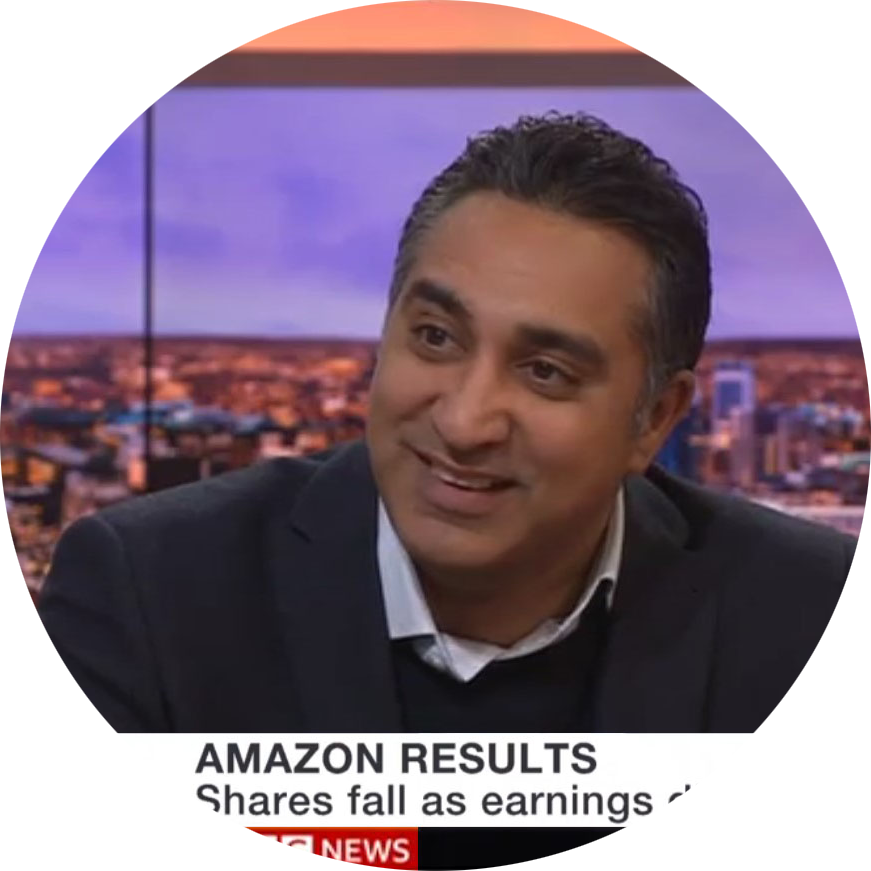
That’s the contrarian thinking of Riaz Kanani, a serial entrepreneur who launched his first business at 16 and later built a company that became part of IBM’s marketing cloud.
Featured on Humans of Fuzia, a global thought-leadership platform connecting leadership, entrepreneurship, coaching, and socially conscious business, Riaz offers a rare perspective: the next era of growth won’t belong to founders chasing trends — but to those who deeply understand how humans interact with technology.
From Teen Founder to AI Strategist
Riaz describes his core strength as “combining people and tech.” The through-line? Data.
“If you can understand how people are using technology, you can usually build systems that can help people do more with tech.”
Over decades, he has straddled both sides of business — technical operations and commercial growth — building and exiting multiple ventures. His consulting vehicle, Connected Paths, supports B2B technology and marketing services companies through fractional operations and marketing leadership.
Most recently, he closed Radiate B2B, an eight-year venture focused on laser-targeted advertising. Why? Because the AI opportunity ahead is exponentially larger.
“The amount of opportunity that exists to grow businesses that take advantage of AI… was much bigger.”
That’s strategic clarity.
The 2026 Founder Dilemma: AI Hype vs. Real Value
In today’s entrepreneurship ecosystem, AI is everywhere — but real transformation is rare.
“There’s a lot of companies building AI into their platforms… but it’s not adding real additional value.”
Riaz highlights a core growth challenge in 2026: differentiation. Adding AI as a feature is no longer enough. Leaders must ask:
- Does this fundamentally change how work is done?
- Does this create measurable leverage?
- Does this unlock new productivity curves?
He predicts that while AI will increase execution speed, companies must decide whether that productivity creates leaner teams — or simply more output with the same cost base.
For small business leadership and scaling startups, this is not theoretical. It’s operational strategy.
Human Expertise vs. AI Acceleration
Riaz doesn’t dismiss human judgment. Instead, he reframes AI’s role.
“A lot of what we think is important decision-making is mundane decision-making. And a lot of that can be taken away by AI.”
AI is powerful at identifying gaps in thinking and accelerating iteration. But final strategic judgment? That still requires human context.
For coaches, consultants, and founders, the opportunity lies in:
- Using AI for research and gap analysis
- Automating outreach and proposal workflows
- Optimizing GEO/AIO (AI engine optimization)
- Refining ICP targeting and account-based marketing
The competitive advantage will belong to those who integrate AI fluently — much like mastering Google search was once a differentiator.
A Bold Move: Ditching the Entrepreneur Tag
While many are rushing to launch AI startups, Riaz plans something different.
“I think the best contribution that I can make is not to set up another startup, but to actually help as many startups as I can to scale and grow.”
His short-term goal: engage with as many AI startups as possible.
Long-term: parachute into the most promising one and help scale it into “the next Meta.”
This is leadership beyond ego — impact over title.
Execution Tip
Schedule a weekly AI intelligence block.
Instead of passively consuming AI news, actively test one new AI workflow inside your business. Implementation beats awareness.
Connect with Riaz Kanani
https://www.linkedin.com/in/riazkanani
Final Insight
The future of entrepreneurship is not AI vs. humans. It’s humans who understand AI — versus those who don’t.
Riaz Kanani reminds us that scaling in 2026 requires strategic discernment, technological fluency, and the humility to pivot when bigger opportunities emerge.