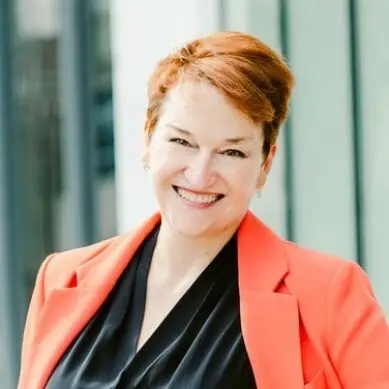




Vida Stanic is an entrepreneur shaped by resilience, freedom, and a deep belief in building something meaningful. Growing up in Serbia, she witnessed firsthand how entrepreneurship can transform lives, and that early exposure sparked her own journey into startups and technology. Featured by Humans of Fuzia, Vida’s story resonates strongly with our 5M+ global community — especially women who are learning to trust their potential, claim leadership, and create impact in spaces where they are still underrepresented.
Q: What inspired you to start your journey as an entrepreneur?
I grew up in Serbia, and my dad is an entrepreneur. He started his business during wartime, coming from extreme poverty — collecting snails to sell just so he could buy bread for his family. At 19, he opened a small mechanic shop that eventually grew into a company employing 20–50 people. Watching his journey showed me what passion, obsession with your work, and freedom really look like. I didn’t want to build someone else’s dream — I wanted to build my own and feel truly alive doing it.
Q: What challenges did you face while building your startup, and how did you overcome them?
My current company isn’t the first thing I tried to build. I worked in different startups — one with no money, another growing very fast with lots of capital. That contrast taught me a lot. One big lesson was that you can’t build a startup properly as a side hustle — you need to commit fully. Another challenge was finding the right co-founder. Eventually, through an accelerator program, I met my current co-founder, Abhishek. We’ve pivoted our idea multiple times, but having aligned values and trust made all the difference.
Q: What has been your proudest milestone so far?
We’re currently closing our pre-seed round, and receiving our first SAFE term sheet was a big moment. But even before that, landing our very first customer stands out. We were extremely early, just figuring things out, and when they said “yes,” it felt like real validation. That moment gave us confidence and momentum — and they stayed with us even through pivots, which meant a lot.
Q: Are you a solopreneur?
No, I have a co-founder.
Q: What are your thoughts on women in leadership and women in tech today?
There are still very few women in tech and leadership. In my accelerator cohort of 37 people, only two women completed the program. That statistic alone says a lot. The issue isn’t capability — women are smart, educated, and talented. The problem is that girls are rarely told they can be leaders, owners, or entrepreneurs. Boys grow up believing leadership is natural for them, while girls often face judgment for being “too much.” We need to give girls permission to imagine themselves as leaders early on.
Q: What message do you have for aspiring women leaders and entrepreneurs?
Have the confidence to fail, make mistakes, and try again — just like most men do. Don’t compare yourself to anyone else. Trust your ability, your knowledge, and yourself. You don’t need to know everything to start.
Q: What does success mean to you — professionally and personally?
Success used to mean hitting a number, like becoming a billionaire. Now, it means building something meaningful that genuinely changes lives. It’s about creating impact, freedom, jobs, and capital that can be reinvested into causes I care about. If I can build technology that makes the world better and enables others to thrive, that’s success to me.
“You don’t need to know everything to start — you just need the confidence to try.”
Connect with Vida Stanic:
Want to be featured?
If you’d like to be featured in the Humans of Fuzia series, email us at fuziatalent@fuzia.com