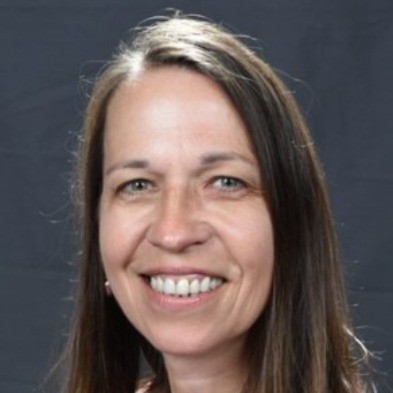



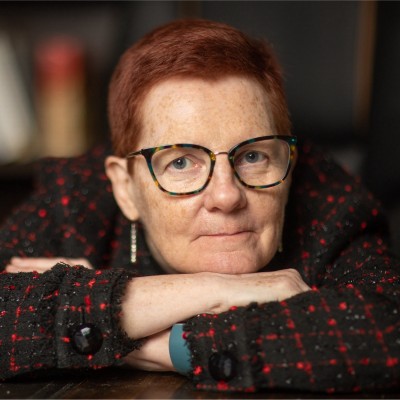
Ruth Pearce is a former high-powered project manager turned leadership coach, lawyer, author, and “pathfinder” for individuals and organizations. After experiencing severe burnout in what was once her dream job, she became deeply curious about how environments, choices, and nervous systems shape our ability to lead and thrive. Today, she helps leaders build sustainable, people-centered workplaces where ambition and wellbeing can coexist. Humans of Fuzia is featuring Ruth because her journey—from corporate boardrooms to coaching rooms and bar exams—embodies resilience, courage, and a commitment to making sure others don’t have to reach breaking point before things change, inspiring our 5M+ strong community of women and allies who believe in He-for-She and She-for-She.
Q: Ruth, can you take us back to the beginning of your journey? What set you on the path you’re on today?
Ruth: My journey has been quite long and winding. I started out in corporate life as a project manager, after doing a Master’s in Economic Theory at the London School of Economics and working in economics and computing. I was actually pushed into project management when a client site suddenly found itself without a project manager. I stepped in, discovered I was good at it, and that set the direction for many years—mostly in international investment banks around the world.
Eventually I moved to the US and took what I thought was my dream role at an insurance company. Over about three years, that job went from being incredibly exciting to completely burning me out. I went from being energized and thrilled to do the work, to someone who never wanted to say the words “project” or “project manager” again. That’s when I started asking myself: How did I get here? What did I miss along the way about my own wellbeing and choices?
That curiosity—about environments, choices, and how we care for ourselves (or don’t)—is what ultimately led me into coaching and speaking. I wanted to understand people more deeply and, in my own small way, help make sure others didn’t have to go through what I did.
Q: What drew you specifically into coaching and the kind of work you do now?
Ruth: It came from a mix of pain and fascination. I had seen how someone who was once excited and driven could become utterly depleted in the very same role. That made me deeply curious about how our nervous systems, our environments, and our patterns of over-commitment all weave together.
When I moved into coaching and speaking, my mission became to look out for people who are overextending themselves—those who are giving up sleep, health, joy, and relationships in the name of “being productive.” I work a lot with middle managers and leaders who still want to lead and be effective, but are struggling to find a more sustainable way.
I’m also involved in an initiative called the Nervous System Economy, launching in 2026, where we’re exploring readiness for change—what’s really within someone’s reach at a given moment. I’ve seen many people go for help that’s wonderful in theory, but not the right intervention for them right now. I’m fascinated by helping people match support to where they truly are.
Q: Looking back, what are some of the milestones you’re most proud of?
Ruth: I have a few, because I’ve had quite a long career!
One big milestone was in 2008, when I decided I was going to keep working full-time as a project manager and go back to school to study law. I’m honestly not sure how I managed to juggle both because it was incredibly demanding, but I did. I took the California bar exam in 2013—three days, seven hours a day—and passed on the first attempt. More recently, I decided to sit the bar exam in North Carolina, where I live now, and passed that too.
I’m also proud of my books. In 2018, I was invited to write a book with Berrett-Koehler. At the time, that felt like a huge accomplishment. Now, with more experience, I think, “Oh, I’d write that differently!”—but that’s part of growth. Then in 2023, I published Be Hopeful, Be Strong, Be Brave, Be Curious with Wiley, which feels very reflective of who I am and how I see coaching. The feedback, especially from unexpected audiences, has been both humbling and affirming.
But honestly, my proudest moments are usually about other people. When a leader I’ve been coaching has that “aha” moment—when they see a small shift that will make leadership easier and more human—that’s everything. When someone comes up after a talk and says, “I’ve never thought about it that way; this will change how I do things,” that’s gold. Even a quiet LinkedIn message from someone who never comments but says, “I read everything you post”—those moments tell me that something I put into the world is making a difference.
Q: Do you work alone, or do you have a team behind you?
Ruth: Technically, I’m a solopreneur—there’s no roster of employees. But I don’t feel like I work alone.
I have a wonderful social media partner, Creator First, who helps me show up consistently and clearly in the digital world. I also work with the Nervous System Economy and its founder, Shannon Eastman, who has been instrumental in helping me think about how to position my work so the right people can find me.
Beyond that, I have a huge informal network, and I’m incredibly grateful for it. I was very shy and awkward when I was younger, so I never deliberately built a network back then. If I could talk to my younger self, I’d say, “Work on your network, even if it feels uncomfortable.” Because having people who can answer questions, give feedback, listen when it’s lonely, or nudge you forward—that changes everything.
So while I don’t have employees, I absolutely have a team of people around me who support my work and support me as a human being.
Q: You’ve thought deeply about women in leadership. What are your reflections on where we are today?
Ruth: When I was younger, I actually found it quite hard to work with women. Not because women are difficult, but because of the environment we were all operating in. We were—and often still are—primed to fit into a very male-dominated framework.
There’s this narrative that to succeed, women must adapt to a competitive, individualistic style. We’ve all heard the cliché example: a woman reads a job ad and won’t apply unless she has eight out of ten qualifications, while a man might apply with two or three and think, “I’ll learn the rest on the job.” That’s not about individual flaws; it’s a reflection of what society has taught us.
Over time, I’ve come to deeply value the perspectives women bring—the relational skills, the ability to sense how others are doing, the instinct for collaboration and care. These are the same qualities that have traditionally supported families and communities, and they are incredibly valuable in teams and organizations.
I also feel compassion for men, because many haven’t been primed to develop those skills. We don’t ask young boys to pretend a doll is a baby and care for it, or encourage emotional sensitivity in the same way. That’s changing slowly, but the system still largely expects men to “claim space” and push forward. That can make it hard for them to even see the value of what women bring.
Some women, in order to survive and succeed, have had to adopt more “traditionally male” behaviors. Sometimes that can become competitive and even harsh toward other women. It’s not that they’re bad people; it’s the cost of playing by the existing rules.
We’re in a complex, transitional moment. The system is rebalancing and learning to value skills and perspectives that, for centuries, were dismissed in the workplace. It’s messy, but it’s also an incredible opportunity.
Q: What message would you like to share with future women leaders and aspiring entrepreneurs?
Ruth: First and foremost: build your network.
Reach out to people you admire—even if it feels uncomfortable. If you see someone who seems to be where you want to be, or who embodies a quality you’d like to grow in, tell them what you appreciate about their work and ask for their advice. You might be very surprised by who responds when you send a thoughtful, specific message.
If you’re at university, stay connected to professors and mentors—they have big networks too. When you attend events, don’t pressure yourself to “work the room.” Just aim to genuinely connect with one or two people and keep nurturing those relationships over time. Networks don’t have to be huge; they just have to be real.
I’d also encourage women to explore women-only or women-centered professional spaces. I avoided them when I was younger, and I now see what I missed. Being in a room where women cheer for each other’s opportunities instead of competing for them can be life-changing. It’s not about excluding men; it’s about giving women a space to name the barriers, share strategies, and celebrate each other.
And finally: be adaptable. Many of us set off thinking, “I will be this by the time I’m 40,” and life has other ideas. My own career is very eclectic—project management, economics, computing, law, coaching, writing—and that variety is incredibly valuable to me and to the people I work with. Say yes to opportunities that feel aligned, even if they weren’t part of your original plan.
Q: How do you define success—professionally and personally?
Ruth: I think success changes depending on where you are in your life.
In the first half of your career, I believe success is about experimentation. You’re learning who you are, what you enjoy, who you work well with, what drains you, what lights you up. Trying things, succeeding, failing, pivoting—that’s not you “being lost,” that’s you gathering data about yourself. The same is true personally. We don’t truly know ourselves when we’re young. We discover who we are by trying, adjusting, and trying again.
In the second half of life, success becomes about focus and impact. You’ve done the experiments. Now you get to ask: Where do I make the most difference? What gives me the deepest sense of fulfillment? It’s about stripping away what no longer fits, so you can put your energy where it truly matters—to you and to others.
And I want to be clear: fulfillment doesn’t have to look grand or public. It might be standing on a stage speaking to a thousand people—or it might be encouraging your child to follow a path that genuinely suits them, even if it breaks with family tradition. It might be being the person who keeps a hospital clean, or serves meals to people who need them.
For me, success is when you understand that you are contributing, and you contribute thoughtfully—whether you’re serving burgers or serving as a CEO—doing your work with integrity and a sense of meaning, rather than just “getting through the day” and being relieved it’s over.
As Ruth puts it, “Success isn’t about the title you hold, it’s about knowing you’re contributing in a way that’s true to you—whether anyone is watching or not.”
Connect with Ruth Pearce:
Want to be featured?
If you’d like to be featured in the Humans of Fuzia series, email us at fuziatalent@fuzia.com.