

“Our current world lacks humanity.”
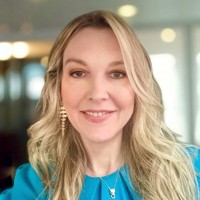
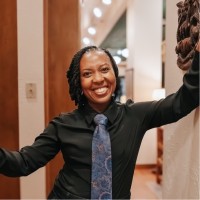
It’s a bold statement—uncomfortable, even—but one that sits at the heart of how leadership, entrepreneurship, and coaching must evolve in 2026. In a world saturated with strategies, automation, and scale, Tamorra Sims is asking a more fundamental question: What if business growth started with human connection?
At Humans of Fuzia (HOF)—a global thought-leadership platform spotlighting leaders at the intersection of entrepreneurship, coaching, women empowerment, and socially conscious business—this question is more relevant than ever. With a deep understanding of how coaches and small business leaders grow and scale, HOF brings forward voices like Tamorra’s—leaders who are not just building businesses, but reshaping systems.
From Dementia Care to Leadership: A Mission Rooted in Humanity
Tamorra Sims didn’t begin her journey in entrepreneurship. She began in senior living and dementia care, where she developed a groundbreaking approach: resident-centered care that prioritizes the person, not the disease.
“I’m an advocate first… everything starts with communication,” she explains.
Her work exposed a critical reality—Alzheimer’s and dementia disproportionately affect Black and Brown communities, yet these groups remain underdiagnosed and underrepresented in care and research. That realization became her turning point.
“I saw opportunities for equity… but I couldn’t change the system from the inside.”
So she did what true leaders do—she stepped out to build something new.
Today, as an executive director and social impact leader, Tamorra focuses on teaching connection through communication, expanding her mission beyond healthcare into business, leadership, and society at large.
The 2026 Leadership Gap: Research Without Execution
One of the biggest challenges in leadership and entrepreneurship today isn’t a lack of knowledge—it’s a lack of implementation.
“There’s a lot of research… but not a lot of implementation.”
This insight reflects a broader industry tension in 2026:
- Businesses know what works—but struggle to execute consistently
- Leaders talk about impact—but fail to operationalize it
- Social equity is discussed—but rarely embedded into systems
Tamorra identifies the real gap: solution-driven leadership.
“It’s easy to say ‘get a hobby’ or ‘eat healthier.’ But what about communities that don’t have access to those options?”
Her work now focuses on building systems that bring resources—health, connection, community—directly into underserved neighborhoods, turning theory into action.
Growth Systems & Entrepreneurship: Why Connection Still Wins
In an era of funnels, automation, and AI-driven growth, Tamorra’s business growth strategy is surprisingly simple:
“The things that are moving forward for me are my connections.”
But this isn’t surface-level networking. It’s deep, trust-based relationship building—a growth system many founders overlook.
Her philosophy is clear:
- Your network isn’t just reach—it’s alignment
- Your mission attracts the right collaborators
- Authenticity builds long-term scalability
“I have the mind for business, but the heart for people.”
This balance is what allows her to build not just a business—but a movement.
The Delegation Dilemma: Why Founders Struggle to Scale
For many entrepreneurs, scaling isn’t limited by ideas—it’s limited by trust.
“Because it’s your baby… it keeps you up at night and wakes you up in the morning.”
Tamorra highlights a common leadership challenge:
- Founders struggle to delegate because their vision feels deeply personal
- Misalignment in teams leads to execution gaps
- Passion fatigue pushes leaders to “just do it themselves”
Her approach? Slow, intentional scaling.
“I’d rather do it slowly with the right people than go fast and have to backtrack.”
In a world obsessed with speed, this is a powerful reminder:
Sustainable growth is built on aligned people—not rushed systems.
Messaging & Funding Challenges in Social Impact Entrepreneurship
Tamorra’s journey also reveals a nuanced challenge in socially conscious leadership—how to communicate truth in a way that drives support without alienating stakeholders.
“Trying to be authentic… but also tactful—that’s one of my challenges.”
In today’s landscape, where conversations around equity and inclusion can feel politically charged, leaders must:
- Refine messaging without diluting truth
- Align with values-driven partners
- Build narratives that invite collaboration, not resistance
This is where strategic storytelling becomes a leadership skill—especially for founders building impact-driven businesses.
Execution Tip
Audit Your “Connection Strategy” This Week
Instead of focusing only on marketing tactics, ask yourself:
- Who are the 5 people aligned with my mission right now?
- How can I deepen—not expand—those relationships?
- What value can I create collaboratively this month?
Growth doesn’t always come from more leads—it often comes from stronger connections.
The Future of Leadership: Human-Centered, System-Driven
If there’s one insight Tamorra Sims leaves us with, it’s this:
“If we could all just see the person—not the disease, not the color, not the status—everything would be better. Businesses, relationships… everything.”
Her work sits at the intersection of leadership, coaching, entrepreneurship, and social impact, reminding us that:
- Systems matter—but people drive them
- Strategy matters—but connection sustains it
- Growth matters—but equity defines its impact
Connect with Tamorra Sims
LinkedIn: Tamorra Sims | LinkedIn
At its core, Humans of Fuzia continues to spotlight leaders like Tamorra—those who are not just navigating growth, but redefining it. For entrepreneurs, coaches, and leaders building in 2026, the message is clear:
The future of business isn’t just scalable—it’s human.